Description
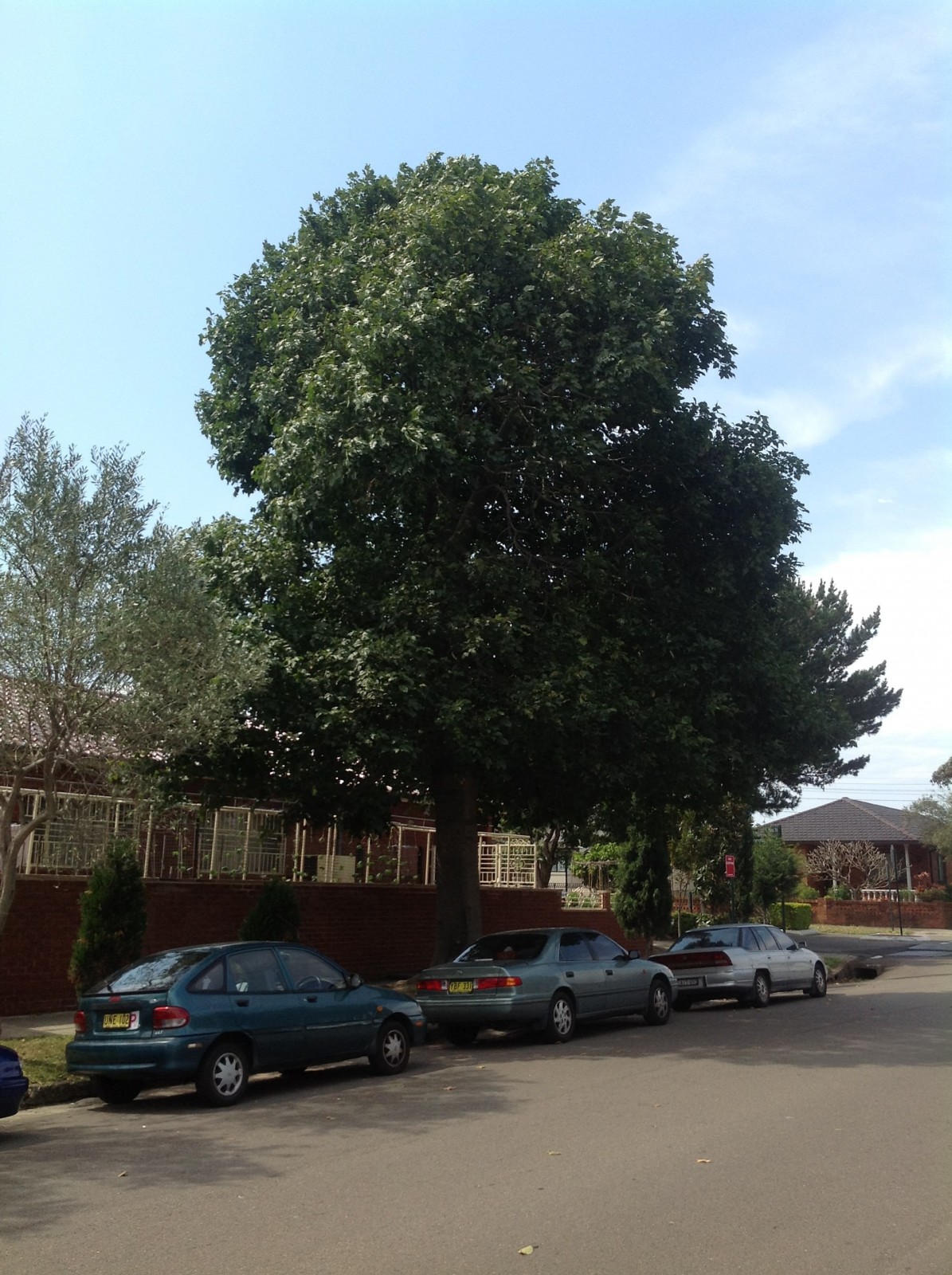
Queensland Lacebark (Brachychiton discolor) is a rainforest tree of eastern Australia. Common names include Lacebark Tree, Lace Kurrajong, Pink Kurrajong, Scrub Bottle Tree, White Kurrajong, Hat Tree and Sycamore. It grows in drier rainforest areas, scattered from Paterson, New South Wales to Mackay, Queensland. It is a medium native tree with a conical form, bears pink flowers with bright red centres (usually when semi-deciduous) from November to January. It is a showy, versatile tree which is hardy, frost and drought resistant.
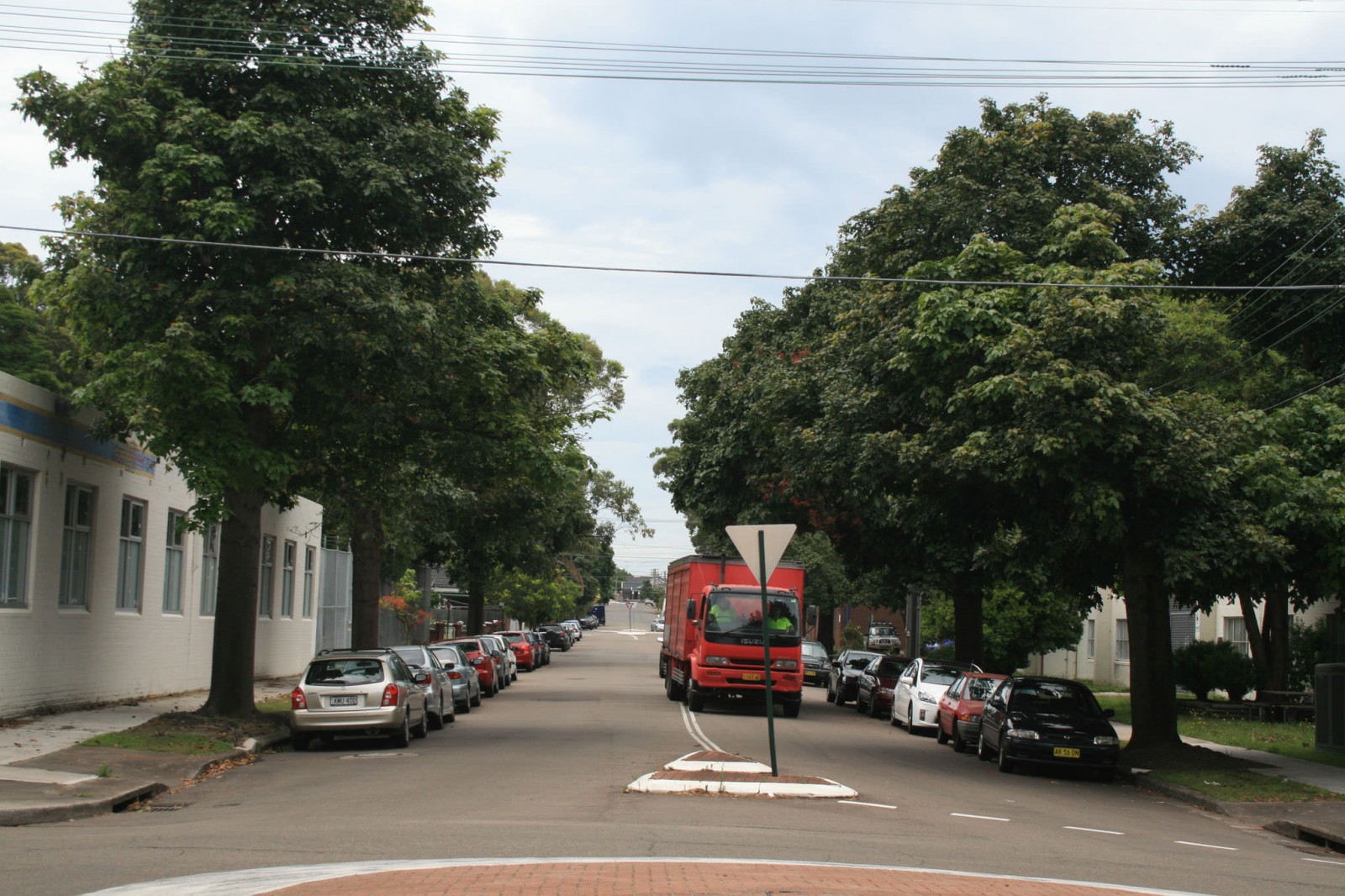
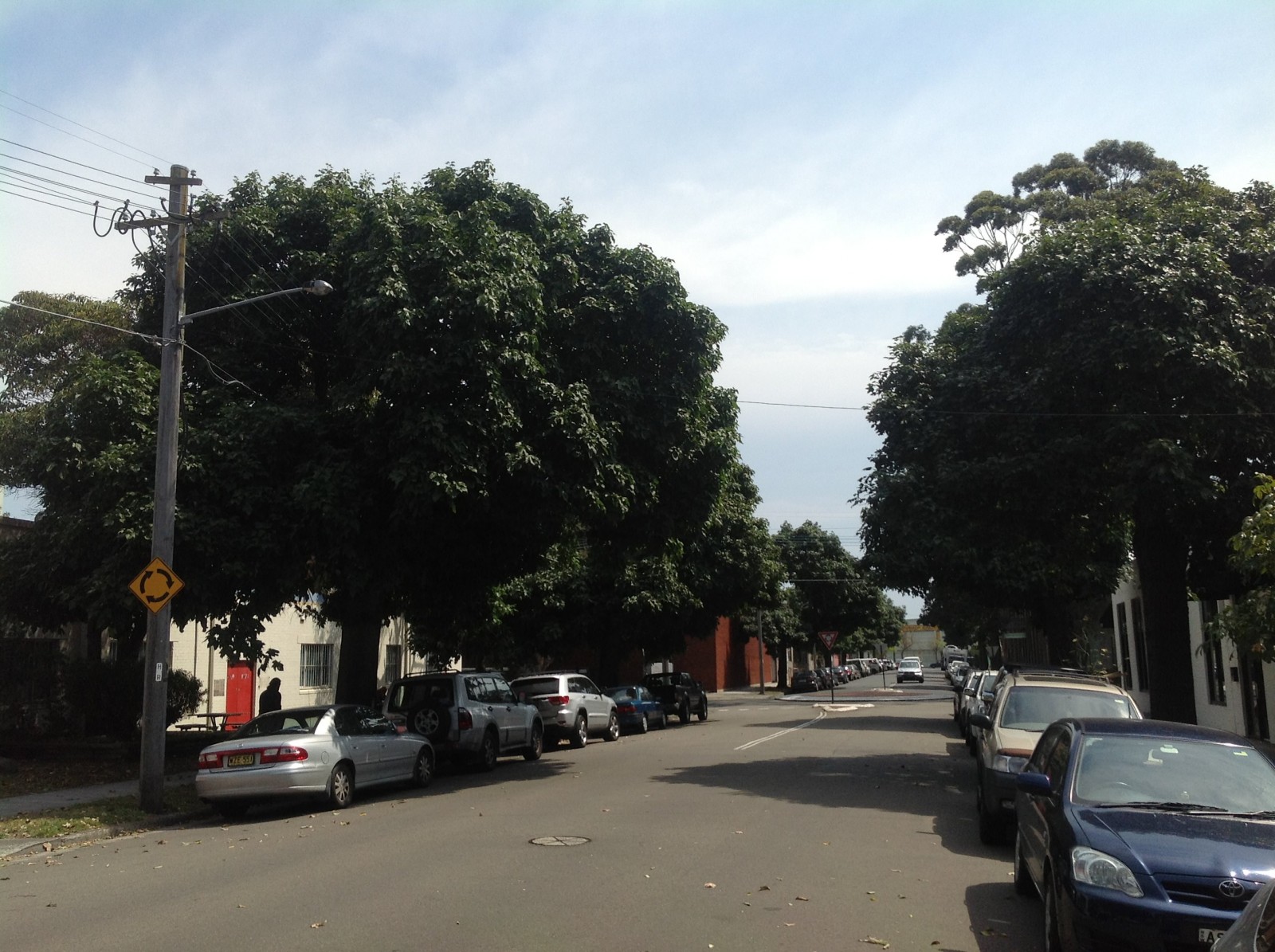
The specimens within Hayes Road appear to have all been planted at the same time and have reached mature proportions, typically with heights of approximately 10-12m and spreads of 7-9m. They appear to be in healthy condition with good canopy densities. Many have been severely and unsympathetically pruned for power line clearance which has reduced the visual quality and significance of some of the trees.
Significance
This avenue planting is aesthetically pleasing and is the only known established avenue of this species anywhere in the wider Sydney metropolitan area. Assumed to be planted in the 1960’s or early 70’s, they are botanically and aesthetically significant.
Historical notes
The Queensland Lacebark (Brachychiton discolor) was probably collected in the late 1800’s and early twentieth century during research expeditions to the rainforests of eastern Australia. It is typical of the late Victorian period and its use and introduction is likely to have been influenced by Charles Moore (Director, Sydney Botanic Gardens 1848-1896) and Joseph Maiden (1897-1924).
It would appear that the Hayes Road planting is an experimental planting to test their use as a street tree, during 1960’s and early 1970’s street beautification programs run by South Sydney Council.
Gallery